Showing posts with label #nofeeslender #realestate #sanjose. Show all posts

Friday, December 20, 2019

5 New Year's Resolutions That Can Help You Buy a Home

Thinking of buying a home this year? We compiled five New Year’s resolutions that can help you keep your financial resume in tiptop shape.

1. Avoid job hopping

Employment history and income are two of the biggest factors lenders look at when evaluating a mortgage application. A new job may be a good career move, but if you plan to buy a home in the new year, know that job hopping can be a red flag to some underwriters - especially if you’re moving to a different industry.

A steady job history and few or no gaps in employment over the past two years are ideal, as it helps lenders more easily forecast your future income.

If you do get a new job while home shopping, let your lender know as soon as possible. It doesn’t mean you won’t qualify for a mortgage - just be prepared to show extra documentation.

If you’re moving from a commissioned or hourly job to one that’s salaried with equal or more compensation, it may help your application. Lenders often prefer borrowers to have steady, predictable paychecks.

2. Limit monthly subscription services

Monthly subscription services are certainly convenient, but they can add up. Even if you pay off your credit card every month, you could be dinged for high credit utilization if your credit report is pulled midcycle.

If you’re thinking of buying a home this year, consider keeping your monthly subscription services to a minimum.

3. Build a solid credit history

One of the first things a lender will look at is your credit history. Lenders prefer borrowers who have a history of paying off credits cards and other debts on time - because it signals that you’re a responsible borrower and less of a risk.

If you don’t have credit, securing a home loan may be significantly more challenging and time-consuming, but not impossible. Records of paying rent and utilities on time, as well as student loan debt or cell phone bills, can help show a potential lender that you have a history of managing monthly payments.

4. Check your credit

Your credit score can have a significant impact on your ability to buy a home. A low credit score can negatively affect how much money a lender is willing to loan you, as well as your interest rate.

Just a few percentage point differences in an interest rate can cost you thousands over the life of a loan. Monitor your credit closely, especially for fraudulent activity, to prevent any surprises that could delay the loan application process.

If you’re unsure of your credit score, many financial websites offer credit score monitoring, or you can get a full credit report once a year.

5. Avoid large purchases

Avoid taking on large amounts of debt - whether it’s buying a car or planning a large vacation - before buying a house. This is advisable even if you’re already preapproved.

Your debt-to-income ratio, or how much money you make compared to how much debt you have, can significantly affect how much money a lender is willing to give you. Keeping debts to a minimum can help make the home-buying process go a lot more smoothly.

Just like proofreading your resume before you apply for a job, cleaning up your financial resume can help improve your chances of buying a home.

Take advantage of online tools and resources, like our affordability calculator, which can help you determine how much home you can afford. Our mortgage calculator can also provide custom down payment estimates based on home price and interest rates. And as you search for your future home, check out our extensive lender and agent reviews, which can help you find the best real estate partners for your needs.

Related:


from Zillow Porchlight https://www.zillow.com/blog/resolutions-can-help-buy-home-2018-224008/

Wednesday, October 23, 2019

How to Actually Afford to Buy a Home in America

Home buyers today face tough challenges - housing prices have soared, a dollar doesn’t go as far as it once did and rent is more expensive than the past.

How are people today making such a large purchase despite these hurdles? With more flexibility and a bit of financing creativity, today’s buyers are finding ways to achieve homeownership.

Know your options (and credit score)

The first step to knowing if you can afford a home is figuring out what financing options are available to you, including what mortgages you’re eligible for and how much you need (and can afford) to put down upfront.

Learning the minimum FICO score required by lenders and understanding your own credit score are important starting points.

Many home shoppers aren’t sure how much they have to put down on a home, what the lender-required minimum down payment will be (it’s not always 20%), or what programs are available to help with down payments, like FHA loans.

Before buyers even start thinking about saving for a home, they should know what their financial resources are and if they’re eligible to buy.

Make enough money to save

With fewer resources to pull from than their older, wealthier counterparts, renters wanting to buy face tough financial headwinds.

According to the Zillow Group Consumer Housing Trends Report 2019, renter households typically earn a median income of $37,500 annually, which is nearly $40,000 less than the median household income netted by households who recently bought a home (of whom the median household income is $75,000 annually).

While there are ways to enter into homeownership without making $75,000 in household income, it’s hard to afford to buy if you make significantly less. “If you’re making $37,500 per year, it’s probably not feasible for you to buy in almost any market,“ says Zillow Chief Economist Dr. Svenja Gudell.

While households purchasing homes are more likely to have two incomes than renter households (and thus a higher median household income combined), even two-income households struggle to afford to buy in competitive markets.

Save enough cash (but not as much as you think)

One of the most daunting parts of home buying? The down payment. In fact, two-thirds of renters cite saving for a down payment as the biggest hurdle to buying a home, according to the Zillow Housing Aspirations Report.

For people buying the national median home valued at $229,000, with the traditional 20% down payment, that’s $45,800 upfront - just to move in.

“The down payment remains a hurdle for a lot of people,” says Gudell. “But they should know they don’t have to put 20% down.”

Although putting down less than 20% means additional considerations, such as the cost for private mortgage insurance (PMI), some find it worth the hassle. In fact, according to the Zillow Group Consumer Housing Trends Report 2019, only one-fifth of recent buyers (20%) put 20% down, and just over half of buyers (56%) put less than the traditional 20% down.

Buyers are also getting creative about piecing together a down payment from multiple sources. According to the report findings, 34% of buyers who get a mortgage also get help in the form of gifts or loans from friends and family to come up with a down payment. 

Know your deal breakers, but be flexible

To get into a home - even if it’s not the home of their dreams - some of today’s buyers are considering homes and locations outside of their initial wish list and getting increasingly flexible when it comes to neighborhood, house condition and even home type.

“I do think people get discouraged when they look in their target neighborhood and they see homes around $170,000 when they’re looking for a $110,000 home,” Gudell says.

Affordably priced homes do, in fact, exist. But in popular areas, where people most often want to live, it’s going to be harder to find that cheaper home, Gudell says.

"If you’re willing to take a longer commute and make a couple trade-offs, you might be able to find a home that is farther out that might be cheaper,” Gudell explains. “You have to leave the paved path before you can find cheaper choices.“

Related:


from Zillow Porchlight https://www.zillow.com/blog/what-it-takes-buy-home-america-221191/

Thursday, September 12, 2019

5 Reasons to Buy a Home This Fall

Real estate markets ebb and flow, just like the seasons. The spring market blooms right along with the flowers, but the fall market often dwindles with the leaves - and this slower pace could be good for buyers.

If you’re in the market for a home, here are five reasons why fall can be a great time to buy.

1. Old inventory may mean deals

Sellers tend to put their homes on the market in the spring, often listing their homes too high right out of the gate. This could result in price reductions throughout the spring and summer months.

These sellers have fewer chances to capture buyers after Labor Day. By October, you are likely to find desperate sellers and prices below a home’s market value.

2. Fewer buyers are competing

Families who want to be in a new home by the beginning of the school season are no longer shopping at this point. That translates into less competition and more opportunities for buyers.

You’ll likely notice fewer buyers at open houses, which could signal a great opportunity to make an offer.

3. Sellers want to close by the end of the year

While a home is where an owner lives and makes memories, it is also an investment - one with tax consequences.

A home seller may want to take advantage of a gain or loss during this tax year, so you might find homeowners looking to make deals so they can close before December 31.

Ask why the seller is selling, and look for listings that offer incentives to close before the end of the year.

4. The holidays motivate sellers

As the holidays approach, sellers are eager to close so they can move on to planning their parties and events.

If a home has not sold by November, the seller is likely motivated to be done with the disruptions caused by listing a home for sale.

5. Harsher weather shows more flaws

The dreary fall and winter months tend to reveal flaws, making them a great time to see a home’s true colors.

It’s better to see the home’s flaws before making the offer, instead of being surprised months after you close. In fact, the best time to do a property inspection is in the rain and snow, because any major issues are more likely to be exposed.

Top photo from Shutterstock.

Related:

Originally published October 2015.


from Zillow Porchlight https://www.zillow.com/blog/fall-a-great-time-to-buy-185456/

Wednesday, July 24, 2019

Van? RV? School Bus? 6 Questions to Ask Before Choosing a Home on Wheels

We’ve all seen photos of the perfectly manicured home on wheels: the reclaimed wood-lined walls, the occupants dreamily sipping coffee and watching a sunrise. People of all ages (including me) are asking themselves, “Can I do that too?" 

When I first saw the van that would one day be mine, I thought it was perfect for me. The 1986 GMC Vandura had a comfy bed, turquoise cabinets and twinkle lights that made me weak in the knees.

But a mobile life can involve just as much work as a stationary one - sometimes even more. You won’t have to pay a mortgage, but you might need new brakes. You won’t have to rely on neighbors to water your plants when you travel, but you will have to keep a tiny space organized and livable on the road.

If those things don’t scare you off, the rewards can far outweigh the work. Here are some important questions to consider first.

Which home is right for you?

There are various names for homes on wheels and recreational vehicles.

The RV is a self-contained, manufactured home on wheels. It typically contains a bathroom and a kitchen, and depending on the version you choose, it can be driven or towed. If you own a vehicle with towing capacity, a towable RV allows you to park and move around more freely.

Camper vans are more compact but offer fewer amenities. They might have a small kitchenette but rarely contain a bathroom. If you’re willing to rough it on the road, the camper van can be a more affordable option.

Then there are the more creative approaches to mobile living. People have converted school buses and vintage Airstreams into living quarters. Choosing the vessel for your life on wheels is an important decision, so weigh your options carefully.

How will you use it?

Previously, people bought mobile homes when they retired. These days, the options for remote work allow more people to embrace a mobile lifestyle, with many variations. Some people want to travel regularly, while others park their homes and only occasionally switch locations.

My motivation for buying a van was the freedom to spend month-long stints on the road and rent out my house whenever I left. As a freelance writer, I often travel in search of stories, and this seemed like a perfect way to do so. I could have the comforts of home and the freedom of wheels.

However, since dropping $5,500 on the initial purchase and about $1,000 in repairs, I’ve landed a full-time job. It’s now more of a weekend camping vehicle than a home. The extra headspace that once seemed luxurious now feels cumbersome, especially when I’m driving over windy mountain passes and spending $60 to fill up my tank. Also, the $80-per-month insurance feels extra expensive, now that I’m paying for something I don’t often use.

I’ll travel regularly in my van someday, but my experience illustrates the importance of knowing how your van will facilitate the life you wish to lead. Where will you go, how often will you go and what will you do? Looking back, I would have gone for something a little smaller and lower maintenance.

Freedom can become debilitating if you don’t know how you’ll use it.

Where will you park?

Campgrounds, RV parks, Walmart parking lots and city streets have all become temporary homes for people who live on the road. But you must consider parking laws, safety and cost - every single night.

RV parks and many campgrounds offer hookups for electricity and water. If your home is designed to accommodate those amenities, they’re nice to have. It helps to research campground details before you hit the road. 

If you’re freeing yourself from rent or a mortgage, you might not want to dump that money back into parking each night. National forests offer free camping, as long as you’re 100-200 feet away from any road, trail or water source. Ask local ranger stations about access to dispersed camping and local regulations. 

While mobile life is often celebrated with a backdrop of ocean beaches or beloved national parks, cities are something to consider too. They just require a little extra consideration.

Vans have a leg up on bigger, flashier RVs when it comes to cities, especially if your van doesn’t look like someone lives in it. 

The most important piece of advice when considering where to park: Do your research. Reserve a spot when heading to popular parks, call ranger stations for information about parking in the area, join local forums, and always collect information ahead of time so you you’re not searching for a place to sleep in the middle of the night with no service.

How much does it cost?

Paring down your belongings can be a great way to save money. But mobile living isn’t always cheap.

First, there’s the cost of your vehicle, which can vary considerably. Conversions - van, Airstream, school bus, etc. - can be expensive, even if you’re doing the work yourself. For example, this stylish Sprinter van conversion cost $54,120. You’ll see a huge range on RV prices as well, from several thousand to millions of dollars.

Once you find a home that’s right for your budget, you’ll need to consider living costs too.

Camping fees are about $20 per night, which can be alleviated by free parking. But you won’t get water and electrical hookups unless you pay for them.

Vehicle insurance will add a few hundred to several thousand dollars in yearly costs. Comprehensive auto insurance, while more expensive than bare-boned liability plans, will protect your home and belongings from vandalism and theft.

I learned the hard way that an RV insurance plan is required of any vehicle that’s been converted into a living space. Even though my van isn’t technically an RV, AAA initially refused to tow me when I broke down in Seattle because I didn’t have RV insurance. I’ve since upgraded, which has been worth it for the peace of mind. 

Depending on the age and condition of your vehicle, you’ll also need to factor in regular repairs. And don’t forget gas money! You’ll spend a lot more on gas for your mobile home than you will on filling up your regular car. And the more toys you carry with your mobile home, the more your gas bills will climb.

Where will you go to the bathroom?

Unless you’re able to find a mobile home with a built-in shower and toilet, personal hygiene can be a challenge on the road. But there are plenty of creative ways to make it work.

A membership to a gym chain with locations across the country, like Planet Fitness or L.A. Fitness, will allow you to access showers and bathrooms - not to mention a workout, which can be vital when your living space only allows you to walk a few feet in either direction.

Campgrounds and truck stops also provide facilities to the traveler looking to freshen up.

If you don’t have a toilet, you’ll likely find yourself using truck-stop and cafe bathrooms. But a late-night bathroom break could mean toilets aren’t available, and you’ll have to settle for whatever is around.

Can you work on the road?

Remote work opportunities have freed many people from the constraints of a typical office job. But working from a mobile home is much different than a home office.

First, consider how often you’ll need to work and where you’ll be able to do so. It might be helpful to stay close to developed areas where there are plenty of establishments offering free Wi-Fi.

If you can work comfortably inside of your mobile home, you can use your mobile device as a Wi-Fi hotspot or purchase a dedicated Wi-Fi hotspot for $100-150. Whichever option you go with, you’ll need to sign up for a service plan with data. Check on the coverage area of service providers before you pick one - they’re no use when you’re in a dead zone!

Working from the road also means you’ll need electricity, which is nice to have for other uses, too, like charging your cell phone or running a fan to stay cool when your engine is off.

Solar panels are a convenient, rechargeable and environmentally friendly energy source. 

I can see my van parked on the street from the window of my house right now. I’m still not entirely sure what a mobile life will look like, but figuring it out is half the fun.

Related:

Originally published September 2017.


from Zillow Porchlight https://www.zillow.com/blog/home-on-wheels-tips-220828/

Monday, July 15, 2019

Say What? Home-Buying Lingo You Should Know

DTI, PMI, LTV … TBH, it can be hard to keep all this stuff straight. This lexicon of real estate terms and acronyms will help you speak the language like a pro.

Appraisal management company (AMC): An institution operated independently of a lender that, once notified by a lender, orders a home appraisal.

Appraisal: An informed, impartial and well-documented opinion of the value of a home, prepared by a licensed and certified appraiser and based on data about comparable homes in the area, as well as the appraiser’s own walkthrough.

Approved for short sale: A term that indicates that a homeowner’s bank has approved a reduced listing price on a home, and the home is ready for resale.

American Society of Home Inspectors (ASHI): A not-for-profit professional association that sets and promotes standards for property inspections and provides educational opportunities to its members. (i.e., Look for this accreditation or something similar when shopping for a home inspector.)

Attorney state: A state in which a real estate attorney is responsible for closing.

Back-end ratio: One of two debt-to-income ratios that a lender analyzes to determine a borrower’s eligibility for a home loan. The ratio compares the borrower’s monthly debt payments (proposed housing expenses, plus student loan, car payment, credit card debt, maintenance or child support and installment loans) to gross income.

Buyers market: Market conditions that exist when homes for sale outnumber buyers. Homes sit on the market a long time, and prices drop.

Cancellation of escrow: A situation in which a buyer backs out of a home purchase.

Capacity: The amount of money a home buyer can afford to borrow.

Cash-value policy: A homeowners insurance policy that pays the replacement cost of a home, minus depreciation, should damage occur.

Closing: A one- to two-hour meeting during which ownership of a home is transferred from seller to buyer. A closing is usually attended by the buyer, the seller, both real estate agents and the lender.

Closing costs: Fees associated with the purchase of a home that are due at the end of the sales transaction. Fees may include the appraisal, the home inspection, a title search, a pest inspection and more. Buyers should budget for an amount that is 1% to 3% of the home’s purchase price.

Closing disclosure (CD): A five-page document sent to the buyer three days before closing. This document spells out all the terms of the loan: the amount, the interest rate, the monthly payment, mortgage insurance, the monthly escrow amount and all closing costs.

Closing escrow: The final and official transfer of property from seller to buyer and delivery of appropriate paperwork to each party. Closing of escrow is the responsibility of the escrow agent.

Comparative market analysis (CMA): An in-depth analysis, prepared by a real estate agent, that determines the estimated value of a home based on recently sold homes of similar condition, size, features and age that are located in the same area.

Compliance agreement: A document signed by the buyer at closing, in which they agree to cooperate if the lender needs to fix any mistakes in the loan documents.

Comps: Or comparable sales, are homes in a given area that have sold within the past six months that a real estate agent uses to determine a home’s value.

Condo insurance: Homeowners insurance that covers personal property and the interior of a condo unit should damage occur.

Contingencies: Conditions written into a home purchase contract that protect the buyer should issues arise with financing, the home inspection, etc.

Conventional 97: A home loan that requires a down payment equivalent to 3% of the home’s purchase price. Private mortgage insurance, which is required, can be canceled when the owner reaches 80% equity.

Conventional loan: A home loan not guaranteed by a government agency, such as the FHA or the VA.

Days on market (DOM): The number of days a property listing is considered active.

Depository institutions: Banks, savings and loans, and credit unions. These institutions underwrite as well as set home loan pricing in-house.

Down payment: A certain portion of the home’s purchase price that a buyer must pay. A minimum requirement is often dictated by the loan type.

Debt-to-income ratio (DTI): A ratio that compares a home buyer’s expenses to gross income.

Earnest money: A security deposit made by the buyer to assure the seller of his or her intent to purchase.

Equity: A percentage of the home’s value owned by the homeowner.

Escrow account: An account required by a lender and funded by a buyer’s mortgage payment to pay the buyer’s homeowners insurance and property taxes.

Escrow agent: A neutral third-party officer who holds all paperwork and funding in trust until all parties in the transaction fulfill their obligations as part of the transfer of property ownership.

Escrow state: A state in which an escrow agent is responsible for closing.

Fannie Mae: A government-sponsored enterprise chartered in 1938 to help ensure a reliable and affordable supply of mortgage funds throughout the country.

Federal Reserve: The central bank of the United States, established in 1913 to provide the nation with a safer, more flexible and more stable monetary and financial system.

Federal Housing Administration (FHA): A government agency created by the National Housing Act of 1934 that insures loans made by private lenders.

FHA 203(k): A rehabilitation loan backed by the federal government that permits home buyers to finance money into a mortgage to repair, improve or upgrade a home.

Foreclosure: A property repossessed by a bank when the owner fails to make mortgage payments.

Freddie Mac: A government agency chartered by Congress in 1970 to provide a constant source of mortgage funding for the nation’s housing markets.

Funding fee: A fee that protects the lender from loss and also funds the loan program itself. Examples include the VA funding fee and the FHA funding fee.

Gentrification: The process of rehabilitation and renewal that occurs in an urban area as the demographic changes. Rents and property values increase, culture changes and lower-income residents are often displaced.

Guaranteed replacement coverage: Homeowners insurance that covers what it would cost to replace property based on today’s prices, not original purchase price, should damage occur.

Homeowners association (HOA): The governing body of a housing development, condo or townhome complex that sets rules and regulations and charges dues and special assessments used to maintain common areas and cover unexpected expenses respectively.

Home equity line of credit (HELOC): A revolving line of credit with an adjustable interest rate. Like a credit card, this line of credit has a limit. There is a specified time during which money can be drawn. Payment in full is due at the end of the draw period.

Home equity loan: A lump-sum loan that allows the homeowner to use the equity in their home as collateral. The loan places a lien against the property and reduces home equity.

Home inspection: A nondestructive visual look at the systems in a building. Inspection occurs when the home is under contract or in escrow.

Homeowners insurance: A policy that protects the structure of the home, its contents, injury to others and living expenses should damage occur.

Housing ratio: One of two debt-to-income ratios that a lender analyzes to determine a borrower’s eligibility for a home loan. The ratio compares total housing cost (principal, homeowners insurance, taxes and private mortgage insurance) to gross income.

In escrow: A period of time (30 days or longer) after a buyer has made an offer on a home and a seller has accepted. During this time, the home is inspected and appraised, and the title searched for liens, etc.

Jumbo loan: A loan amount that exceeds the Fannie Mae/Freddie Mac limit, which is generally $425,100 in most parts of the U.S.

Listing price: The price of a home, as set by the seller.

Loan estimate: A three-page document sent to an applicant three days after they apply for a home loan. The document includes loan terms, monthly payment and closing costs.

Loan-to-value ratio (LTV): The amount of the loan divided by the price of the house. Lenders reward lower LTV ratios.

Market value coverage: Homeowners insurance that covers the amount the home would go for on the market, not the cost to repair, should damage occur.

Mechanic’s lien: A hold against a property, filed in the county recorder’s office by someone who’s done work on a home and not been paid. If the homeowner refuses to pay, the lien allows a foreclosure action.

Mortgage broker: A licensed professional who works on behalf of the buyer to secure financing through a bank or other lending institution.

Mortgage companies: Lenders who underwrite loans in-house and fund loans from a line of credit before selling them off to a loan buyer.

Mortgage interest deduction: Mortgage interest paid in a year subtracted from annual gross salary.

Mortgage interest rate: The price of borrowing money. The base rate is set by the Federal Reserve and then customized per borrower, based on credit score, down payment, property type and points the buyer pays to lower the rate.

Multiple listing service (MLS): A database where real estate agents list properties for sale.

Origination fee: A fee, charged by a broker or lender, to initiate and complete the home loan application process.

Piggyback loan: A combination of loans bundled to avoid private mortgage Insurance. One loan covers 80% of the home’s value, another loan covers 10% to 15% of the home’s value, and the buyer contributes the remainder.

Principal, interest, property taxes and homeowners insurance (PITI): The components of a monthly mortgage payment.

Private mortgage insurance (PMI): A fee charged to borrowers who make a down payment that is less than 20% of the home’s value. The fee, 0.3% to 1.5% of the yearly loan amount, can be canceled in certain circumstances when the borrower reaches 20% equity.

Points: Prepaid interest owed at closing, with one point representing 1% of the loan. Paying points, which are tax deductible, will lower the monthly mortgage payment.

Pre-approval: A thorough assessment of a borrower’s income, assets and other data to determine a loan amount they would qualify for. A real estate agent will request a pre-approval or pre-qualification letter before showing a buyer a home.

Pre-qualification: A basic assessment of income, assets and credit score to determine what, if any, loan programs a borrower might qualify for. A real estate agent will request a pre-approval or pre-qualification letter before showing a buyer a home.

Property tax exemption: A reduction in taxes based on specific criteria, such as installation of a renewable energy system or rehabilitation of a historic home.

Round table closing: All parties (the buyer, the seller, the real estate agents and maybe the lender) meet at a specified time to sign paperwork, pay fees and finalize the transfer of homeownership.

Sellers market: Market conditions that exist when buyers outnumber homes for sale. Bidding wars are common.

Short sale: The sale of a home by an owner who owes more on the home than it’s worth (i.e., “underwater” or “upside down”). The owner’s bank must approve a lower listing price before the home can be sold.

Special assessment: A fee charged by a condo complex HOA when cash on reserve is not enough to cover unexpected expenses.

Tax lien: The government’s legal claim against property when the homeowner neglects or fails to pay a tax debt.

Third-party review required: Verbiage included in a home listing to indicate that the lender has not yet approved the home for short sale. The seller must submit the buyer’s offer to the lender for approval.

Title insurance: Insurance that protects the buyer and lender should an individual or entity step forward with a claim that was attached to the property before the seller transferred legal ownership of the property or “title” to the buyer.

Transfer stamps: The form in which transfer taxes are paid by the home buyer. Stamps can also serve as proof of transfer tax payment.

Transfer taxes: Fees imposed by the state, county or municipality on transfer of title.

Under contract: A period of time (30 days or longer) after a buyer has made an offer on a home and a seller has accepted. During this time, the home is inspected and appraised, and the title is searched for liens, etc.

Underwater or upside down: A situation in which a homeowner owes more for a property than it’s worth.

Underwriting: A process a lender follows to assess a home loan applicant’s income, assets and credit, and the risk involved in offering the applicant a mortgage.

VA home loan: A home loan partially guaranteed by the United States Department of Veteran Affairs and offered by private lenders, such as banks and mortgage companies.

VantageScore: A credit scoring model lenders use to make lending decisions. A borrower’s score is based on bill-paying habits, debt balances, age, variety of credit accounts and number of inquiries on credit reports.

Walkthrough: A buyer’s final inspection of a home before closing.

Water certificate: A document that certifies that a water account has been paid in full. The seller must produce this certificate at closing.

Related:


from Zillow Porchlight https://www.zillow.com/blog/real-estate-lingo-and-acronyms-230688/

Thursday, July 11, 2019

Investment Property: How Much Can You Write Off on Your Taxes?

There are certain things you can do as a real estate investor to help manage your tax bill and maximize your after-tax return on investment. To do so, however, you need to understand the primary ways in which investment real estate portfolios get taxed. You must also have a general grasp of some abstract concepts like calculating your tax basis, as well as the depreciation of capital investments.

Warning: This article is not going to make you an expert. But it will acquaint you with the basic terminology so you can be better prepared for a meeting with your tax adviser.

Taxation of rental income

The IRS taxes the real estate portfolios of living investors in two primary ways: income tax and capital gains tax. (A third way, estate tax, applies only to dead investors.)

Rental income is taxable - as ordinary income tax. That means you must declare it as income on your tax return and pay income tax on it. Unlike wages, rental income is not subject to FICA taxes.

Your income is everything you get from rents and royalties on the property, minus any deductible expenses. You can’t deduct everything though. You can only deduct mortgage interest and repairs you make that restore the property to its original minimally functional condition. You can’t deduct capital investments like new buildings, additions or renovations. More on these later.

Capital gains tax

The second tax bill you need to worry about is capital gains tax. The IRS taxes you on any net profits you get out of a property when you sell it. If you’re flipping the property and you’ve owned it for less than a year, you pay short-term capital gains tax, which is the same rate as your marginal income tax rate. If you’re in the 28% tax bracket, you’ll pay a 28% tax on short-term capital gains.

If you hold the property for 12 months, you’ll qualify for more favorable long-term capital gains. Depending on your marginal income tax bracket, these taxes could range from 0% to 15%. In every bracket, however, the IRS takes a smaller cut out of long-term gains than out of ordinary income or short-term gains.

Calculating capital gains

You pay capital gains tax on the difference between your selling price in the property and your adjusted tax basis. Your adjusted tax basis in a property is the original cost you paid for the property, plus any amount invested in renovations and improvements (including labor costs on these projects) that you have not previously deducted for taxes.

If you have deductions associated with the property, you subtract them from your tax basis. If your adjusted tax basis is higher than your sale, you have a capital loss. You can subtract capital losses from a given year from capital gains to reduce your tax bill. If you have more capital losses than capital gains, you can “carry forward” these capital losses into future years to offset future capital gains. If you have no capital gains, you can deduct $3,000 annually until you have recognized all your capital loss carryforward.

How to defer capital gains taxes: an intro to like-kind exchanges

The IRS provides an important exception to capital gains taxation, made-to-order for real estate investors: If you own an investment property, you can sell your property at a profit and roll your money over into another property within 60 days without having to pay capital gains taxes at all. This transaction is known as a Section 1031 exchange, named for the section of the U.S. Revenue Code that allows it. You cannot swap your rental property for a personal residence, or vice versa. For this reason, these exchanges are called like-kind exchanges, in that the property you replace it with needs to be substantially similar to what you sold.

The 1031 exchange makes it possible for real estate investors to defer paying capital gains tax, which is another advantage over investing in mutual funds, stocks, bonds and other securities or collectibles. Outside of a retirement account, you have to pay tax on gains in these items by April 15 of the year after you sold them.

Depreciation and amortization

This is a broad concept, so we can only cover the very basics here. When you buy investment property - be it a building, a computer or a horse - the IRS knows that the item won’t stay young and new forever. Over time, the property will decrease in value. Depreciation is the process of claiming a deduction to compensate you for the property’s decrease in value during the year.

Note: You can’t depreciate your personal residence. You can only depreciate investment property. For more information on the process of depreciation, see IRS Publication 946, How To Depreciate Property.

Land, of course, doesn’t depreciate. But minerals underneath the land do. If you are extracting oil or other minerals, or timber, for that matter, from the land, you will account for the gradual loss in value through a process called depletion.

Likewise, when you make a purchase of investment real estate or capital equipment with a useful life of longer than a year, the IRS knows you will be using that property to generate income for a long time to come.

Except in certain circumstances, the IRS does not allow you to deduct the full cost of your investment in the first year. Instead, you must amortize your investment over a number of years. For real estate, you must spread the deduction out over 27.5 years.

Passive activity rules

Again, these rules are complex. But in a nutshell, if you are a passive investor - meaning you are not working day to day in the business of managing your real estate investments - you are subject to passive activity rules. Basically, you can only deduct passive losses to the extent that you can cancel out gains from passive activities. These rules restrict your ability to use passive activity losses to offset capital gains elsewhere in your portfolio. Congress implemented these rules in 1986 to eliminate tax loopholes and abusive tax shelters.

Most individual investor landlords can deduct up to $25,000 per year in losses on rental properties, if necessary (subject to income limitation). Hopefully you won’t have to make use of this provision much.

Property taxes

Expect to pay property taxes to local and county governments each year. Your local government will assess the market value of your property at its “highest and best use” and charge you a percentage of that value every year. You can deduct property taxes against your rental income, though, provided the property tax is uniformly assessed throughout the jurisdiction and is not a special assessment.

Other tax deductions

Watch for opportunities to take deductions for these common real estate investment expenses:

  • Mortgage interest
  • Legal fees related to your investment properties or business
  • Mileage
  • Business use of your home (the home office deduction)
  • Advertising fees

Employees (but if they are working on capital improvements or renovations, you have to amortize their labor costs as part of your capital investment, rather than as a current year expense.)

Related:


from Zillow Porchlight https://www.zillow.com/blog/tax-on-investment-property-230671/

Monday, June 10, 2019

3 Reasons to Live in a New Home Before Renovating

In today’s market, many buyers forego fixer-uppers for move-in ready homes. As a result, significant opportunities abound in prime locations as homes that need work linger on the market.

In competitive markets, savvy consumers gravitate toward these homes that nobody else wants. Why? They can customize the home to their requirements and build equity along the way.

That said, I often recommend that buyers live in a new home for a while before undertaking any major remodeling or pricey home improvements. I’m not talking about lighting or plumbing repairs necessary to make the house habitable. Rather, I’m referring to discretionary remodeling, expansions and other improvement projects.

Here are three good reasons to at least consider holding off on the big home improvement projects until you’ve had some time to settle in.

1. Living in the home can change your mind

You may have grand visions for what you’d like to do to a home, based on its condition and your priorities at the time you buy it. But until you’re actually living there, it’s difficult to know exactly how you’ll use the house, what will work for you and what won’t.

Ultimately, it’s this day-to-day experience that will inform your home improvement decisions, instead of early notions of how you want your everyday experience to be.

2. After buying a home, you deserve a break

Buying a home is a massive project, an enormous change in your life and a shock to the system - if not your finances. I’ve seen buyers jump through hoops, spending months on end looking for a home. In some situations, it becomes a part-time job.

A home renovation can be yet another big and stressful project, what with all the decisions to make and contractors to deal with.

My recommendation: Take a break from the stress of buying your new home.

3. You need time to plan

Any renovation, no matter how small, should be designed with care. That means speaking to multiple architects, contractors or designers to get their take on your ideas and options - a time-consuming process.

An hour with a well-qualified contractor can uncover opportunities where you least expected them. For instance, even though it may be an added cost now, moving the laundry machines from the garage to the top floor during a larger renovation may save you time and money down the road.

Conversely, hiring architects and contractors while under the constraints of an escrow period is likely to cause problems for you later.

Some buyers want to jump into renovations because they don’t want to live in a construction zone or pay rent and a mortgage at the same time. While this may make some economic sense upfront, it can still cause costly problems later.

Often, buyers who said they don’t want a home that requires any work end up buying a home that needs at least some. It’s the natural evolution of the buying process. Rarely does someone end up buying the home they started off thinking they wanted.

While you should be open to doing work on a home, don’t feel stressed about getting it all done at once. Live as-is for six months to a year. Take the home for a test drive and see how it runs. You may be surprised at how your perspective and priorities change once you settle in.

Find out which home renovations DIYers most regretted tackling themselves.

Related:

Note: The views and opinions expressed in this article are those of the author and do not necessarily reflect the opinion or position of Zillow.
Originally published August 2016.


from Zillow Porchlight https://www.zillow.com/blog/live-in-home-before-renovating-64719/

Tuesday, January 29, 2019

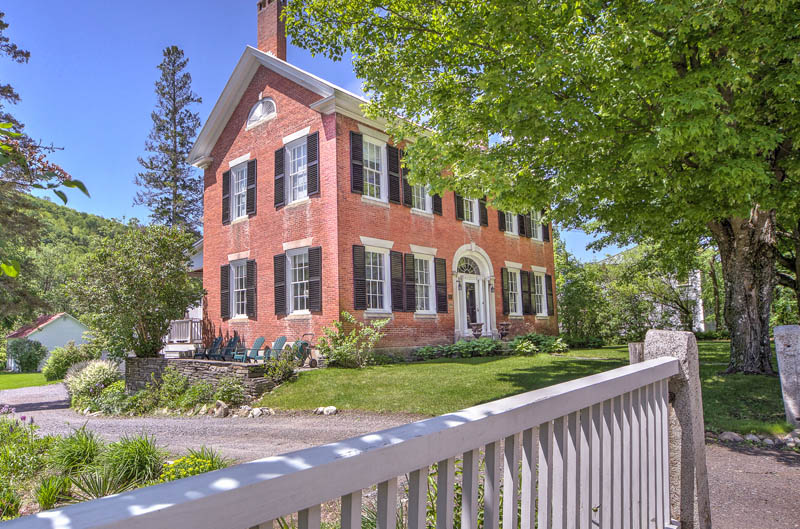
1800s Estate Proves History Is Anything But Drab

Steven Favreau is the type to go big - and go home.

When he set out to put down roots near his hometown of Boston, Favreau fell in love with an old country estate in quaint Chelsea, Vermont. It was the perfect place for this interior designer to escape from the hubbub of big city life after working with celebrity clients and more.

“It was a quintessential Vermont house in a quintessential Vermont town,” said Favreau, about spotting the house in 2012. “I hopped on a plane and bought it the next week.”

Built in 1832, the house was once owned by a man named Aaron Davis, whose family lived in it for at least 100 years. Davis’ granddaughter eventually sold the 23-acre property in the 1980s, and the new owner converted it into a bed-and-breakfast. (There’s still a portrait of Davis above one of the home’s five fireplaces.)

After Favreau purchased the 5-bed, 5-bath home, he sought to restore it to its original grandeur - at a frenetic pace. A contractor brought in a crew to rework everything from the wiring (it was a fire waiting to happen) to the wallpaper (there were eight layers throughout the house). The workers even put in a massive new beam to support the house and keep it from sinking.

Up next on the designer’s list: keeping the look, feel and integrity of the antique touches, while updating the space to accommodate today’s trends. He tore out a downstairs wall to expand the kitchen to 700 square feet; the master suite got a modern bath with a soaking tub.

Favreau painted walls in his signature bright colors and added bold wallpaper. He lined the master bathroom with tree-print wallpaper. The dining room got a splash of flamingo pink with a print of Victorian-looking cake plates - a nod to the era in which the house was built.

“What I wanted to use for inspiration was the house and the period of the house, so nodding to the period and updating it with a contemporary aesthetic,” Favreau said. “It says today, but it also says yesterday.”

Some things are distinctly New England. A wooden footbridge connects the main property to 22 secluded acres on the other side of the White River. On warm summer nights, Favreau’s family will pull a dining room table out onto the bridge and dine alfresco.

In the winter, the adjacent land allows for snowshoeing or cross-country skiing.

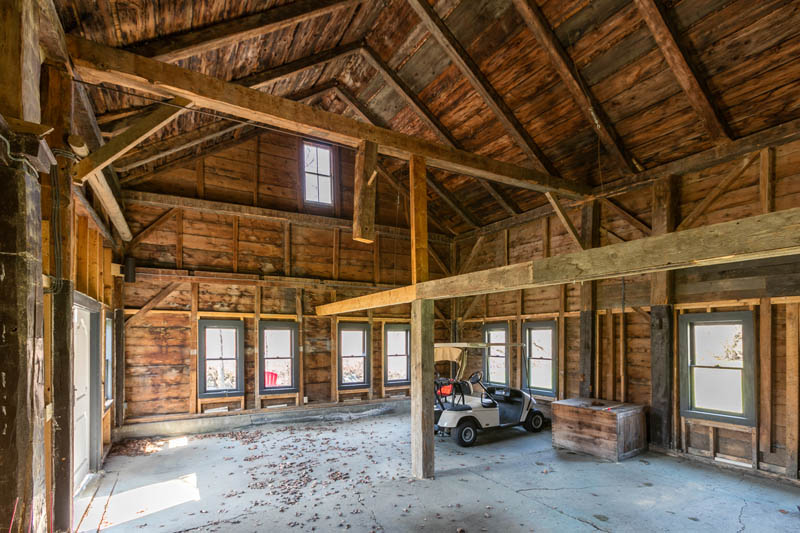
There’s also an old wood barn, which Favreau envisions becoming an event space for weddings or storage. The possibilities for the next owner are limitless, he said.

“It’s a big glorious house, and my family is a big glorious family. We’ve enjoyed it,” he added. “I feel like I’ve loved my time being there and up in Vermont, but it’s time to find the next one. Maybe an oceanside property.”

The home is on the market for $695,000. Zoe Hathorn Washburn of Snyder Donegan carries the listing.

Interior photos courtesy of Jim Mauchly of Mountain Graphics Photography. Exterior photos courtesy of Andrew Holson with Snyder Donegan Real Estate Group.

Related:

Originally published September 2017.


from Zillow Porchlight https://www.zillow.com/blog/historic-vermont-estate-221014/

Thursday, October 25, 2018

7 Places in America That Will Pay You to Move There

If you’re willing to move and if you meet the qualifications, many rural American towns are offering incentives aimed at attracting new residents and reviving their communities.

At the beginning of the 20th century, rural America housed more than half the country’s entire population. While the number of Americans living in rural areas has been roughly stable over the past century - as urban and suburban America have boomed - its share of the total population has declined, falling from 54 percent in 1910 to just 19 percent in 2010.

This is due, in part, to migration to urban cores, especially by younger generations and the middle class.

This decline in population - and the accompanying social and economic challenges - is forcing rural America to come up with incentives to attract new residents back to rural communities.

Tribune, Kansas, offers such a program. “If you move here, we will pay down your student debt,” explains Christy Hopkins, community development director for Kansas’ least populated county, Greeley (in which Tribune sits).

This program, called the Rural Opportunity Zone (ROZ) program, offers perks to grads from big cities for moving to underpopulated towns in one of 77 participating Kansas counties. One of the incentives? They’ll help you pay off your student loans - up to $15,000 over the course of five years.

And it seems to be working - for both the town and its new residents.

“We’re the least populated county - we’re 105th in population for counties in Kansas, and now we’re eighth in college degrees per capita. There’s a correlation to draw,” says Hopkins.

Here are five towns and three states that offer a robust set of loans, programs and/or assistance for those seeking to become homeowners:

Curtis, Nebraska

Population: 891
Median home value: $79,000

Dream of building your own home from the ground up? Curtis, Nebraska, has a sweet deal for you. If you construct a single-family home within a specified time period,  you’ll receive the lot of land it sits on for free.

Marne, Iowa

Population: 115
Median home value: $75,300

Just 45 minutes east of Omaha, Marne will give you a lot of land for free - all you have to do is build the house (conventional construction or modular) and meet program requirements. Houses must be a minimum of 1,200 square feet, and the average lot size is approximately 80 feet by 120 feet.  

Harmony, Minnesota

Population: 999
Median home value: $93,900

Dreaming of a a newly built home in the Land of 10,000 Lakes? Good news: Your dream comes with a cash rebate.

The Harmony Economic Development Authority offers a cash rebate program to incentivize new home construction. Based on the final estimated market value of the new home, rebates range from $5,000 to $12,000, and there are no restrictions on the applicant’s age, income level or current residency.

Baltimore, Maryland

Population: 616,958
Median home value: $116,300

Definitively not a rural town, Baltimore offers homeowners incentives that are too appealing to leave off this list.

Baltimore has two programs offering robust incentives for buying a home in the city. Buying Into Baltimore offers a $5,000 forgivable loan (forgiven by 20 percent each year so that by the end of five years, you no longer have a balance) if you meet certain qualifications.

The city’s second solution is a brilliant one. The Vacants to Value Booster program offers $10,000 toward down payment and closing costs when you buy one of the program’s distressed or formerly distressed properties.

New Haven, Connecticut

Population: 131,014
Median home value: $168,400

Also not a rural area, but offering an incredibly generous package of homeowner incentives, New Haven offers a suite of programs totaling up to $80,000 for new homeowners, including a $10,000 forgivable five-year loan to first-time home buyers, $30,000 renovation assistance and/or up to $40,000 for college tuition.   

Alaska

Population: 739,795
Median home value: $310,200

Alaska offers incentives for veterans and live-in caretakers of physically or mentally disabled residents. They even have a manufactured home program and a rural owner-occupied loan program. See the full list of programs here.

Colorado

Population: 5.6 million
Median home value: $368,100

Colorado offers traditional programs that assist with down payments and low interest rates, but it also has a disability program that helps first-time buyers who have a permanent disability finance their home.

The state also has a down payment assistance grant that provides recipients with up to 4 percent of their first mortgage, which doesn’t require repayment.


Related:

Originally published October 2017. Information updated October 2018.


from Zillow Porchlight https://www.zillow.com/blog/7-places-america-will-pay-move-222241/

Monday, October 1, 2018

5 Reasons to Buy a Home This Fall

Real estate markets ebb and flow, just like the seasons. The spring market blooms right along with the flowers, but the fall market often dwindles with the leaves - and this slower pace could be good for buyers.

If you’re in the market for a home, here are five reasons why fall can be a great time to buy.

1. Old inventory may mean deals

Sellers tend to put their homes on the market in the spring, often listing their homes too high right out of the gate. This could result in price reductions throughout the spring and summer months.

These sellers have fewer chances to capture buyers after Labor Day. By October, you are likely to find desperate sellers and prices below a home’s market value.

2. Fewer buyers are competing

Families who want to be in a new home by the beginning of the school season are no longer shopping at this point. That translates into less competition and more opportunities for buyers.

You’ll likely notice fewer buyers at open houses, which could signal a great opportunity to make an offer.

3. Sellers want to close by the end of the year

While a home is where an owner lives and makes memories, it is also an investment - one with tax consequences.

A home seller may want to take advantage of a gain or loss during this tax year, so you might find homeowners looking to make deals so they can close before December 31.

Ask why the seller is selling, and look for listings that offer incentives to close before the end of the year.

4. The holidays motivate sellers

As the holidays approach, sellers are eager to close so they can move on to planning their parties and events.

If a home has not sold by November, the seller is likely motivated to be done with the disruptions caused by listing a home for sale.

5. Harsher weather shows more flaws

The dreary fall and winter months tend to reveal flaws, making them a great time to see a home’s true colors.

It’s better to see the home’s flaws before making the offer, instead of being surprised months after you close. In fact, the best time to do a property inspection is in the rain and snow, because any major issues are more likely to be exposed.

Top photo from Shutterstock.

Related:

Originally published October 19, 2015.


from Zillow Porchlight https://www.zillow.com/blog/fall-a-great-time-to-buy-185456/

Monday, July 30, 2018

5 Expenses Homeowners Pay That Renters Don't

Homeownership may be a goal for some, but it’s not the right fit for many.

Renters account for 37 percent of all households in America - or just over 43.7 million homes, up more than 6.9 million since 2005. Even still, more than half of millennial and Gen Z renters consider buying, with 18 percent seriously considering it.

Both lifestyles afford their fair share of pros and cons. So before you meet with a real estate agent, consider these five costs homeowners pay that renters don’t - they could make you reconsider buying altogether.

1. Property taxes

As long as you own a home, you’ll pay property taxes. The typical U.S. homeowner pays $2,110 per year in property taxes, meaning they’re a significant - and ongoing - chunk of your budget.

Factor this expense into the equation from the get-go to avoid surprises down the road. The property tax rates vary among states, so try a mortgage calculator to estimate costs in your area.

2. Homeowners insurance

Homeowners insurance protects you against losses and damage to your home caused by perils such as fires, storms or burglary. It also covers legal costs if someone is injured in your home or on your property.

Homeowners insurance is almost always required in order to get a home loan. It costs an average of $35 per month for every $100,000 of your home’s value.

If you intend to purchase a condo, you’ll need a condo insurance policy - separate from traditional homeowner’s insurance - which costs an average of $100 to $400 a year.

3. Maintenance and repairs

Don’t forget about those small repairs that you won’t be calling your landlord about anymore. Notice a tear in your window screen? Can’t get your toilet to stop running? What about those burned out light bulbs in your hallway? You get the idea.

Maintenance costs can add an additional $3,021 to the typical U.S. homeowner’s annual bill. Of course, this amount increases as your home ages.

And don’t forget about repairs. Conventional water heaters last about a decade, with a new one costing you between $500 to $1,500 on average. Air conditioning units don’t typically last much longer than 15 years, and an asphalt shingle roof won’t serve you too well after 20 years.

4. HOA fees

Sure, that monthly mortgage payment seems affordable, but don’t forget to take homeowners association (HOA) fees into account.

On average, HOA fees cost anywhere from $200 to $400 per month. They usually fund perks like your fitness center, neighborhood landscaping, community pool and other common areas.

Such amenities are usually covered as a renter, but when you own your home, you’re paying for these luxuries on top of your mortgage payment.

5. Utilities

When you’re renting, it’s common for your apartment or landlord to cover some costs. When you own your home, you’re in charge of covering it all - water, electric, gas, internet and cable.

While many factors determine how much you’ll pay for utilities - like the size of your home and the climate you live in - the typical U.S. homeowner pays $2,953 in utility costs every year.

Ultimately, renting might be more cost-effective in the end, depending on your lifestyle, location and financial situation. As long as you crunch the numbers and factor in these costs, you’ll make the right choice for your needs.

Related:

Originally published August 18, 2015. Statistics updated July 2018.


from Zillow Porchlight https://www.zillow.com/blog/homeowners-pay-renters-dont-181888/

Tuesday, July 10, 2018

HARP Now Extended Through 2016

Since it first launched in 2009, the Home Affordable Refinance Program (HARP) has helped 3.2 million borrowers across the country lower their monthly payments by refinancing at historically low interest rates. Friday, FHFA Director Melvin Watt announced this relief won’t be ending any time soon.

HARP will continue through the end of 2016, allowing homeowners who owe more than their homes are worth and regularly make mortgage payments to refinance. To help eligible borrowers take advantage of this program, Zillow remains the only marketplace supporting HARP and FHA Streamline refinances.

The FHFA has started a 10-day Twitter campaign using the hashtag #HARPfacts to help spread the word. They’re targeting Chicago first, where nearly 40,000 Chicago-area homeowners could save an average $189 per month or $2,300 a year with HARP.

Get answers to your HARP questions here.

Related:


from Zillow Porchlight https://www.zillow.com/blog/harp-now-extended-through-2016-175787/

Monday, July 2, 2018

What You Need to Know About the Fair Housing Act

If you’ve searched for a new place to live recently, you’ve likely seen the Equal Housing Opportunity logo (an equal sign inside a house) on a landlord’s, real estate agent’s or lender’s paperwork.

But the Fair Housing Act is more than just a logo. It’s a federal law designed to protect renters and buyers from discrimination.

Here are some key points to know about the Fair Housing Act when you’re searching for a place to live.

What is the Fair Housing Act?

Also known as the Civil Rights Act of 1968, the Fair Housing Act was signed into law by President Lyndon B. Johnson just days after the assassination of Martin Luther King Jr., who had championed the cause for many years.

The act prohibits housing discrimination based on race, color, religion, national origin, sex, disability and familial status (sex was added in 1974, and disability and familial status were added in 1988).

At the time the act was signed, overt housing discrimination was a huge problem throughout the country, including the attempted segregation of whole neighborhoods and the outright rejection of qualified renters based on race and other factors.

Today, much of the discrimination in the housing market is less obvious, but it’s still an unfortunate reality.

According to the National Fair Housing Alliance (NFHA), over 25,000 housing discrimination complaints were filed with the federal government and local and national fair housing agencies in 2017. Over half of the complaints were based on disability, followed by race at 20 percent.

But these numbers reflect only reported incidents. The NFHA estimates that over 4 million instances of housing discrimination occur annually, but many people don’t realize they’ve been discriminated against - or know what steps to take when it happens.

What does housing discrimination look like?

Most of the people you encounter in your home search, including real estate agents, sellers, landlords, property management companies and lenders, are bound to Fair Housing Act regulations and additional state and local laws, based on where you live or are looking to live.

Fair Housing Act violations can occur in all phases of buying and renting, including in advertising, while you search, throughout the application process, in financing or credit checks, and during eviction proceedings.

Here are a few examples of discrimination people in protected classes have encountered:

  • A real estate agent tries to “steer” a buyer away from a certain neighborhood
  • A landlord tries to avoid renting to someone by saying the unit advertised has been rented when it hasn’t
  • A property management company refuses to rent to a family with children or requires a higher deposit
  • A landlord evicts a person of color for a reason they wouldn’t evict a white tenant for
  • A mortgage broker asks questions or requests excessive documentation from an immigrant couple that they wouldn’t request from another buyer
  • A lender charges a single woman a higher interest rate than what her credit score should dictate
  • A landlord refuses to make reasonable accommodations for a tenant who is disabled

What do I do if I’ve been discriminated against?

If you’ve been discriminated against in any of the ways above, or if you suspect that other actions taken by a property manager, landlord, real estate agent, broker or lender may be discriminatory, there are many resources at your disposal.

  1. File a report: File a complaint with your regional Department of Housing and Urban Development (HUD) office - find yours at HUD.gov. You can also file a complaint on the national HUD website or with local housing resources found through the NFHA.
  2. Get more info from local housing agencies: You can find a list of local housing counselors at HUD.gov. Besides answering questions about discrimination claims, these agencies provide home buyer education workshops, pre-purchase counseling and rental housing assistance.
  3. Talk to an attorney: Like any other legal issue, when pursuing a complaint under the Fair Housing Act, it’s smart to consult a lawyer.
  4. Find people you can trust: If you experienced housing discrimination from your real estate agent, mortgage broker or lender, it’s time to find a new professional to help you in your home search. Ask friends, family members and colleagues for referrals they know, like and trust. Remember - these real estate professionals are working for you, so their only concern should be finding you the home that’s right for you.

Related:


from Zillow Porchlight https://www.zillow.com/blog/what-you-need-to-know-about-the-fair-housing-act-227310/

Friday, June 29, 2018

The Do's and Don'ts of Home Equity Loans

Home equity is a valued resource, and if you have it, you might be tempted to tap that wealth for other purposes. A home equity loan, which allows you to use your home’s equity as collateral, is a great way to do this. But depending on your personal situation, it may not be the right thing to do.

Here’s when a home equity loan makes sense - and when it doesn’t.

DON’T: Fund a lifestyle

Remember when homeowners yanked cash out of their homes to fund affluent lifestyles they couldn’t really afford? These reckless borrowers, with their boats, fancy cars, lavish vacations and other luxury items, paid the price when the housing bubble burst. Property values plunged, and they lost their homes.

Lesson learned: Don’t squander your equity! Look at a home equity loan as an investment - not as extra cash when making spending decisions.

DO: Make home improvements

The safest use of home equity funds is for home improvements that will add to the home’s value. If you have a one-time project (e.g., a new roof), then a home equity loan might make sense.

If you need money over time to fund ongoing home improvement projects, then a home equity line of credit (HELOC) would make more sense. HELOCs let you pay as you go and usually have a variable rate that’s tied to the prime rate, plus or minus some percentage.

DON’T: Pay for basic expenses or bills

This is a no-brainer, but it’s always worth reiterating: Basic expenses like groceries, clothing, utilities and phone bills should be a part of your household budget.

If your budget doesn’t cover these and you’re thinking of borrowing money to afford them, it’s time to rework your budget and cut some of the excess.

DO: Consolidate debt

Consolidating multiple balances, including your high-interest credit card debts, will make perfect sense when you run the numbers. Who doesn’t want to save potentially thousands of dollars in interest?

Debt consolidation will simplify your life, too, but beware: It only works if you have discipline. If you don’t, you’ll likely run all your balances back up again and end up in even worse shape.

DON’T: Finance college

If you have college-age children, this may seem like a great use of home equity. However, the potential consequences down the road could be significant. And risky.

Remember, tapping into your home equity may mean it takes longer to pay off the loan. It also may delay your retirement or put you even deeper in debt. And as you get older, it will likely be more difficult to earn the money to pay back the loan, so don’t jeopardize your financial security.

Related:

Note: The views and opinions expressed in this article are those of the author and do not necessarily reflect the opinion or position of Zillow.

Originally published February 23, 2016.


from Zillow Porchlight https://www.zillow.com/blog/dos-donts-of-home-equity-loans-192836/

Wednesday, April 18, 2018

This Tiny Home Has Its Own Pizza Oven – House of the Week

Forget waiting 45 minutes for the delivery guy to show up. In this custom tiny home, pizzas are ready in just two minutes!

Empty nesters looking to avoid the burden of a big mortgage, Robert and Rebekah Sofia embarked on a 20-month journey designing and building a 221-square-foot home in Ocklawaha, FL. Most people would balk at the idea of putting a 800-degree wood-fired pizza oven in such a small space. But with layers of plaster, cement and a heavy metal door, it’s completely insulated.

The Floridians were passionate about bringing a European flavor to their design and using recycled building materials. From the exterior corrugated metal to the cedar planks and doors - everything had a prior life. Best of all: The materials only cost $15,000.

In addition to the pizza oven, there are amenities you might not expect in a tiny house: a big apron sink, outdoor soaking tub, formal dining room with a chandelier, a hangout music loft and his-and-hers closets.

Photos by John Jernigan.

Related:

The post This Tiny Home Has Its Own Pizza Oven – House of the Week appeared first on Zillow Porchlight.


from Zillow Porchlight https://www.zillow.com/blog/tiny-home-pizza-oven-226014/